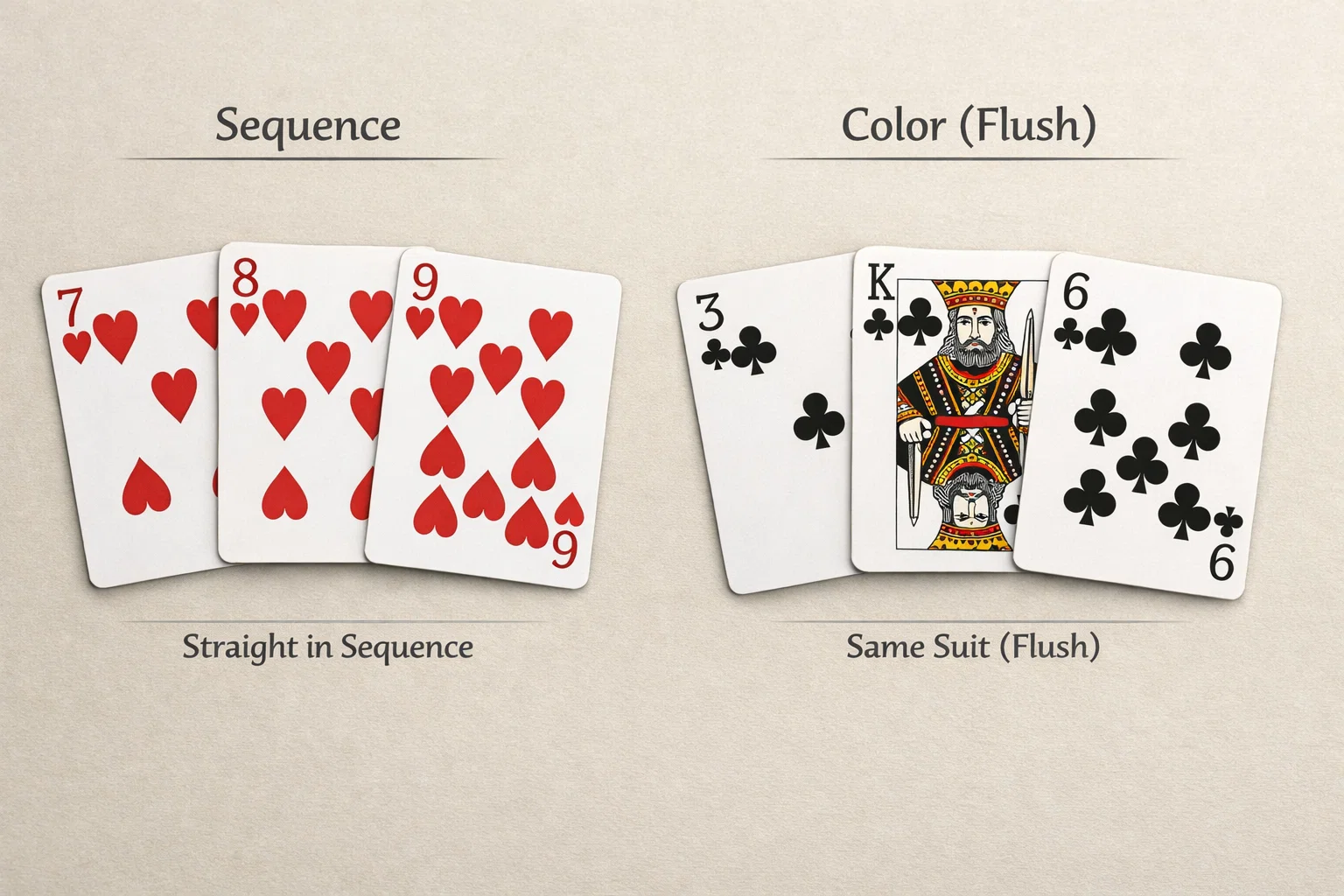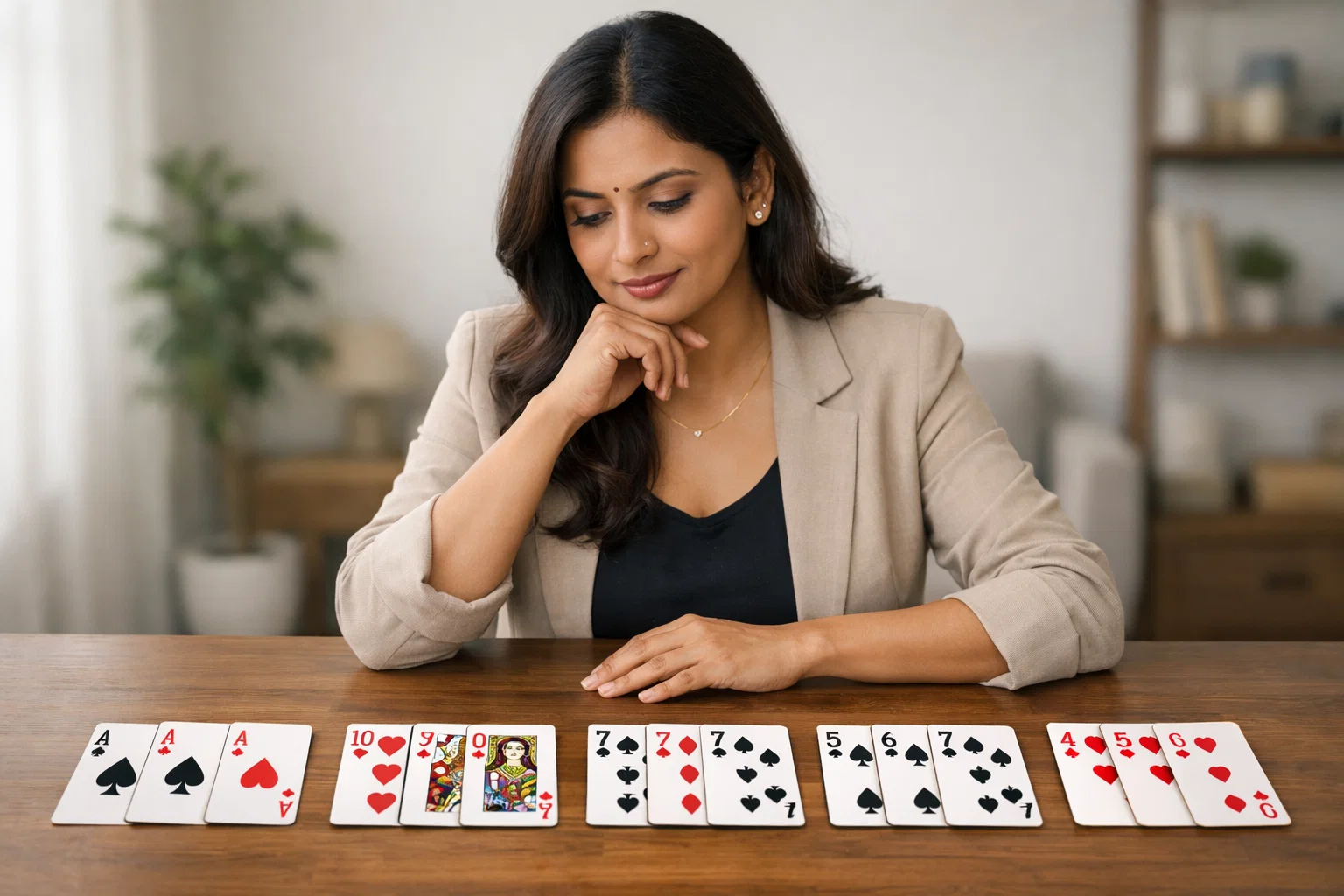
Key Takeaways
Information is Power: The later you act in a round, the more information you have about your opponents’ hand strength.
The Dealer Advantage: The Dealer (Late Position) is the most profitable seat because they see everyone else’s move before committing.
Risk Management in Early Seats: Players in Early Position should play tighter and avoid heavy bluffing since they act with the least information.
Blind vs. Seen Dynamics: Your position should dictate how long you stay “Blind” to keep the betting costs low for yourself while pressuring others.
Sideshow Strategy: Middle and Late positions are the best spots to request a sideshow to eliminate competition cheaply.
Most players who jump into a teen patti game focus entirely on the cards in their hands. They wait for a high-ranking sequence or a trail, thinking that the cards alone determine the winner.
I get it—I used to think the same way.
However, seasoned pros at tpmaster.in know that the secret to consistent winning isn’t just the cards—it is where you are sitting.
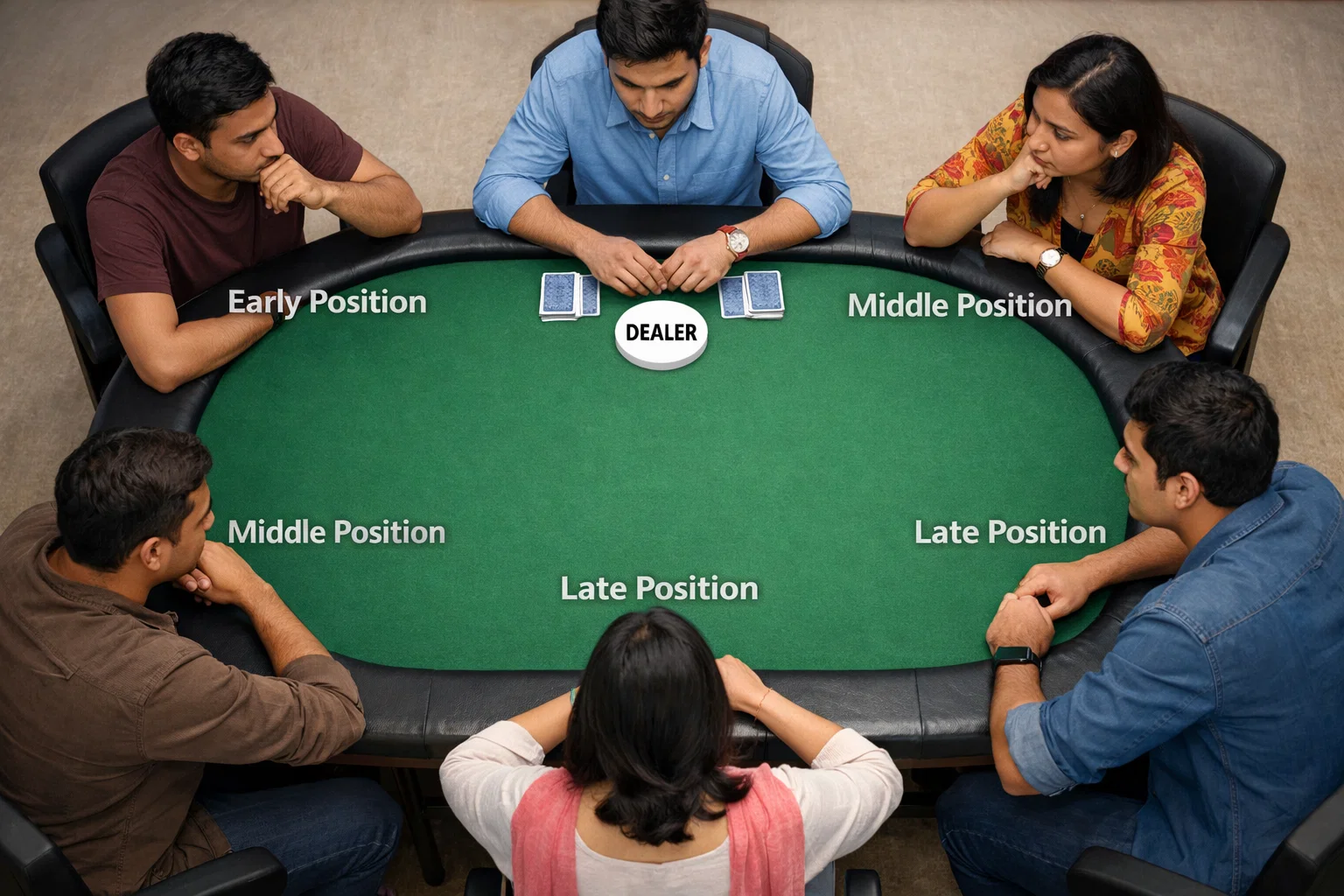
Table position refers to where you sit relative to the Dealer. In Teen Patti, the action moves clockwise. This means the person to the left of the dealer acts first, and the dealer acts last.
This simple rotation creates a massive difference in the amount of information you collect before you have to place a bet.
Whether you are playing a casual round with friends or joining an online teen patti game, understanding the nuances of Early, Middle, and Late positions will completely change your approach to betting and bluffing.
At least, that’s been my experience over the years.
What is Teen Patti Table Position?
In a standard teen patti card game, the “Button” or the Dealer position rotates every hand. Your position is defined by how many seats away you are from that button.
Early Position (EP): These are the first two or three players to the left of the Dealer. They have the “disadvantage” of acting first.
Middle Position (MP): These are the players sitting between the early seats and the final seats. They have a moderate amount of information.
Late Position (LP): This is the Dealer and the player immediately to the Dealer’s right (often called the Cut-off). These are the strongest seats at the table.
Understanding these zones is the first step in any comprehensive teen patti guide. It allows you to transition from a reactive player to a proactive strategist.
Though honestly, it takes a few sessions before this starts feeling natural.
Early Position: The Danger Zone
The Early Position is often called the “hot seat” because you are forced to set the pace of the game without knowing anything about what others are holding.
The Burden of Action
When you are in EP, you are the first to decide whether to play Blind or Seen.
If you choose to play Seen immediately, you signal to the entire table that you have a playable hand. This gives players in later positions the chance to fold weak hands early, saving them money, or trap you if they have something better.
Many players don’t realize just how much information they’re giving away with that early “Seen” decision.
Blind and Seen Cost Differences
In a typical teen patti game, the cost of a “Seen” bet is double that of a “Blind” bet.
If you are in an early position and play Seen, you are essentially paying more to play in a position where you have the least information.
This is a mathematically disadvantageous spot—something that becomes painfully obvious once you start tracking your sessions.
Common Mistakes in Early Position
A common mistake beginners make in early seats is over-betting medium-strength hands.
Because you haven’t seen anyone else’s reaction yet, you might think your Pair of Kings is unbeatable, only to find out the Dealer has a Sequence.
I’ve been burned by this more times than I’d like to admit.
In Early Position, your strategy should be:
- Play Tight: Only commit to big bets with premium hands.
- Stay Blind Longer: Try to stay Blind for at least two rounds to keep your “Chaal” costs low and hide your hand strength.
- Avoid Pure Bluffs: It is very difficult to bluff five people sitting behind you who haven’t acted yet. In most cases, you’ll just end up losing chips to someone who was waiting patiently.
Middle Position: The Tactical Bridge
Middle Position (MP) is a transitionary phase. You aren’t as vulnerable as the early players, but you aren’t as safe as the Dealer.
The Information Shift
By the time the action reaches the Middle Position, you have seen the first few players either fold, play Blind, or see their cards.
If the EP players all fold, you effectively become the “new” Early Position. If they all bet heavily, you know you need a very strong hand to continue.
The table dynamics can shift quickly here, so stay alert.
The Sideshow Logic
The MP is often the best place to initiate a Sideshow.
If you have a decent hand and the person before you is also “Seen,” asking for a sideshow allows you to compare cards without doubling the bet for the whole table.
This works well usually, though results may vary depending on how aggressive your table is.
However, you must be careful. If the player in the Late Position is still Blind, they can continue to let you and the EP players battle it out, increasing the pot while they pay half the price.
I’ve seen this trap work beautifully from the Dealer seat.
Middle Position Strategy:
- Observe the EP: If the early players look nervous or play Seen and check, you can apply pressure.
- Selective Aggression: You can afford to play a wider range of hands than in EP, but you should still be wary of the players acting after you.
Late Position: The Seat of Power
The Dealer seat is objectively the best position in any teen patti game. There is a reason why professional players say the game begins and ends with the Dealer.
The Information Advantage
As the last person to act, you have seen the decisions of every other player. You know:
- How many players found their cards worth playing (Seen).
- How many players are playing on pure “Blind” luck.
- The “betting vibe”—is it a cautious table or an aggressive one?
Psychological Pressure
When you are in a Late Position, you can “buy” the pot.
If everyone before you has checked or put in small bets, a large raise from the Dealer position often forces others to fold, regardless of your actual cards.
This is because your position suggests you have the “final say.”
It doesn’t always work, but when it does, it’s incredibly satisfying.
Controlling the Pot
In a teen patti online environment, pot control is vital.
In Late Position, you decide if the pot stays small or grows. If you want to keep it cheap to see another card, you just call. If you want to build a massive pot because you have a Trail (Set), you raise.
You are the conductor of the orchestra—or at least, that’s how it feels when things go your way.
Why Late Position Wins More:
- Lower Average Cost: You can stay Blind while others are forced to play Seen to “test” the water.
- Bluffing Opportunities: It is much easier to represent a strong hand when you are the last to act.
- The “Last Look”: You only put money in when the odds are strictly in your favor.
Blind vs. Seen Choices Based on Position
One of the most frequent questions on tpmaster.in is: “When should I see my cards?”
The answer depends almost entirely on your seat. There’s no one-size-fits-all rule, but here’s what generally works.
Early Position Blind Play:
You should almost always play at least 1-2 rounds Blind in EP.
If you see your cards immediately and have a weak hand, you’ve wasted a “Seen” bet. If you stay Blind, you keep the pressure on others while keeping your own costs at a $1:2$ ratio compared to Seen players.
Some players push this even further, staying Blind for three or four rounds, though that depends on your risk tolerance.
Late Position Blind Play:
In the Dealer seat, you can afford to stay Blind the longest.
If three people before you have already played Seen and bet high, you can simply fold without ever looking at your cards, saving yourself the higher cost.
Conversely, if everyone folds to you, you can win the pot with a small Blind bet without ever risking a Seen Chaal.
This is where position really pays off.
Common Misconceptions About Table Position
Many players think that Teen Patti is a game of “pure luck” and that position doesn’t matter because the cards are dealt randomly.
This is a myth—one I believed myself when I first started playing seriously.
Misconception 1: “The cards are the same regardless of where I sit.”
While the physical cards don’t change, your ability to play them changes.
A Pair of Aces in Early Position is a “nervous” hand because you might get raised by a hidden flush.
A Pair of Aces in Late Position is a “killing” hand because you can see if anyone else is acting like they have a flush before you commit.
The difference is night and day.
Misconception 2: “Bluffing is better in Early Position to show strength.”
This is often a recipe for disaster in a teen patti cash game.
Showing strength too early usually just scares away the “bad” hands and keeps the “good” hands in the pot. You want the opposite: you want to trap people when you’re strong and scare them when they’re weak.
Both are easier from Late Position.
I’ve learned this the hard way, and chances are you will too if you try early-position bluffs too often.
Position Strategy: The Core Summary
To truly master the teen patti guide to winning, you must internalize these three rules:
Tighten Up in the Front: Play fewer hands and stay Blind as much as possible when sitting to the left of the dealer.
Watch for Cues in the Middle: Use the middle seats to gauge the strength of the table and use the sideshow feature to narrow the field.
Attack from the Back: Use the Dealer position to dominate the table. This is where you should do most of your raising and bluffing.
Table position is the “hidden card” that you are dealt in every single round.
Even if you are dealt a mediocre hand, a strong position can turn it into a winning one. Conversely, a great hand in a poor position can often lead to heavy losses if not played with extreme caution.
It takes practice to feel this instinctively, but once you do, your win rate will likely improve.
The next time you log into an online teen patti game, don’t just look at your cards. Look at the Dealer button. See who acts before you and who acts after.
You will soon realize that the player who controls the position usually ends up controlling the chips.
About the Author
Ishaan “The Dealer” Sharma
Ishaan is a professional card game analyst and veteran strategist with over 15 years of experience in the Indian card gaming circuit. Based in Delhi, he has competed in high-stakes teen patti tournaments and has contributed extensively to the evolution of teen patti strategy guides. When he isn’t analyzing the latest 3 patti variations, he can be found exploring the intricate bidding mechanics of the 29 card game.