
Key Takeaways
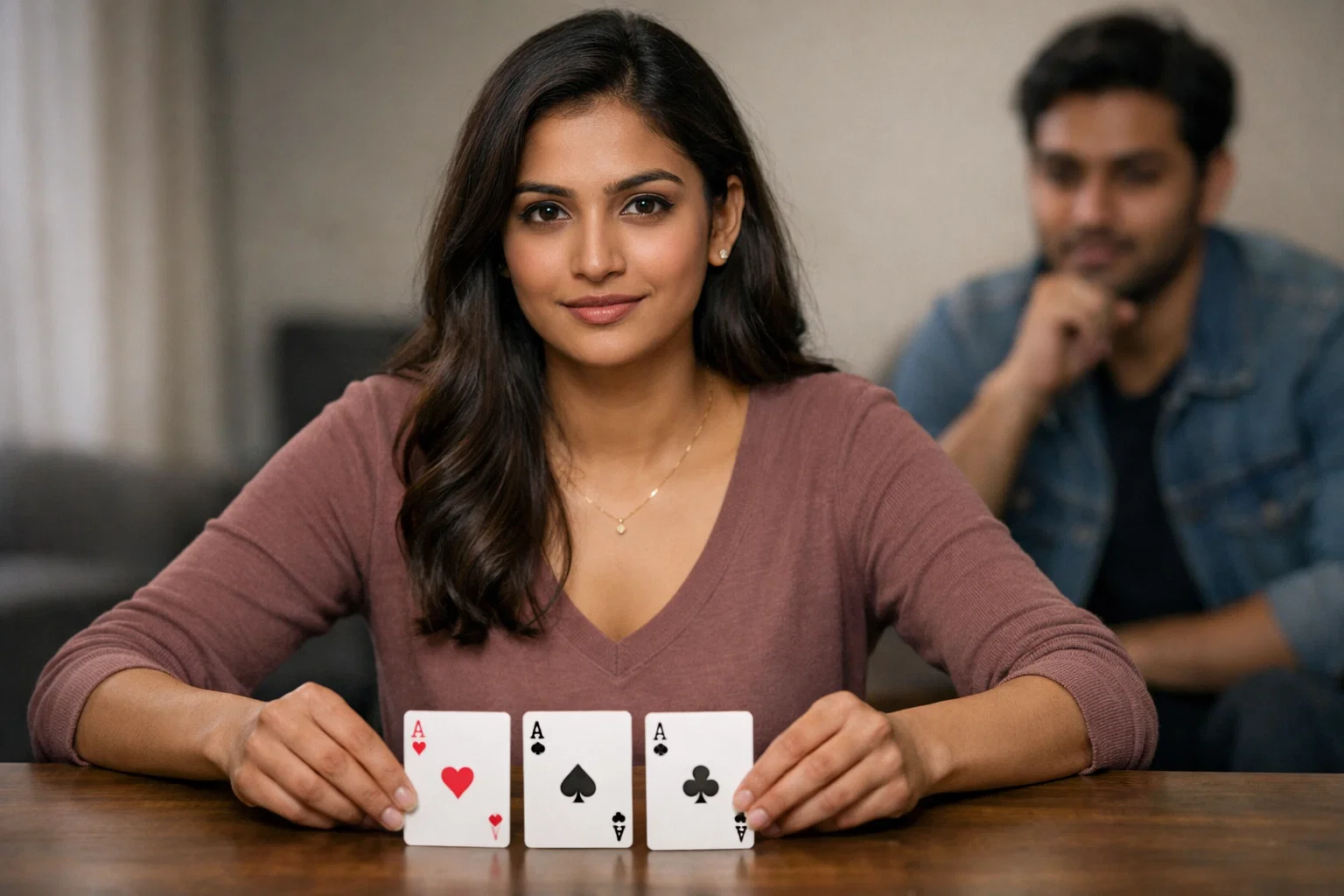
• Trail (A-A-A) is the ultimate winning hand in any card patti game, sitting right at the top of the hierarchy.
• A Pure Sequence is significantly stronger than a standard Sequence, since it requires all three cards to be of the same suit.
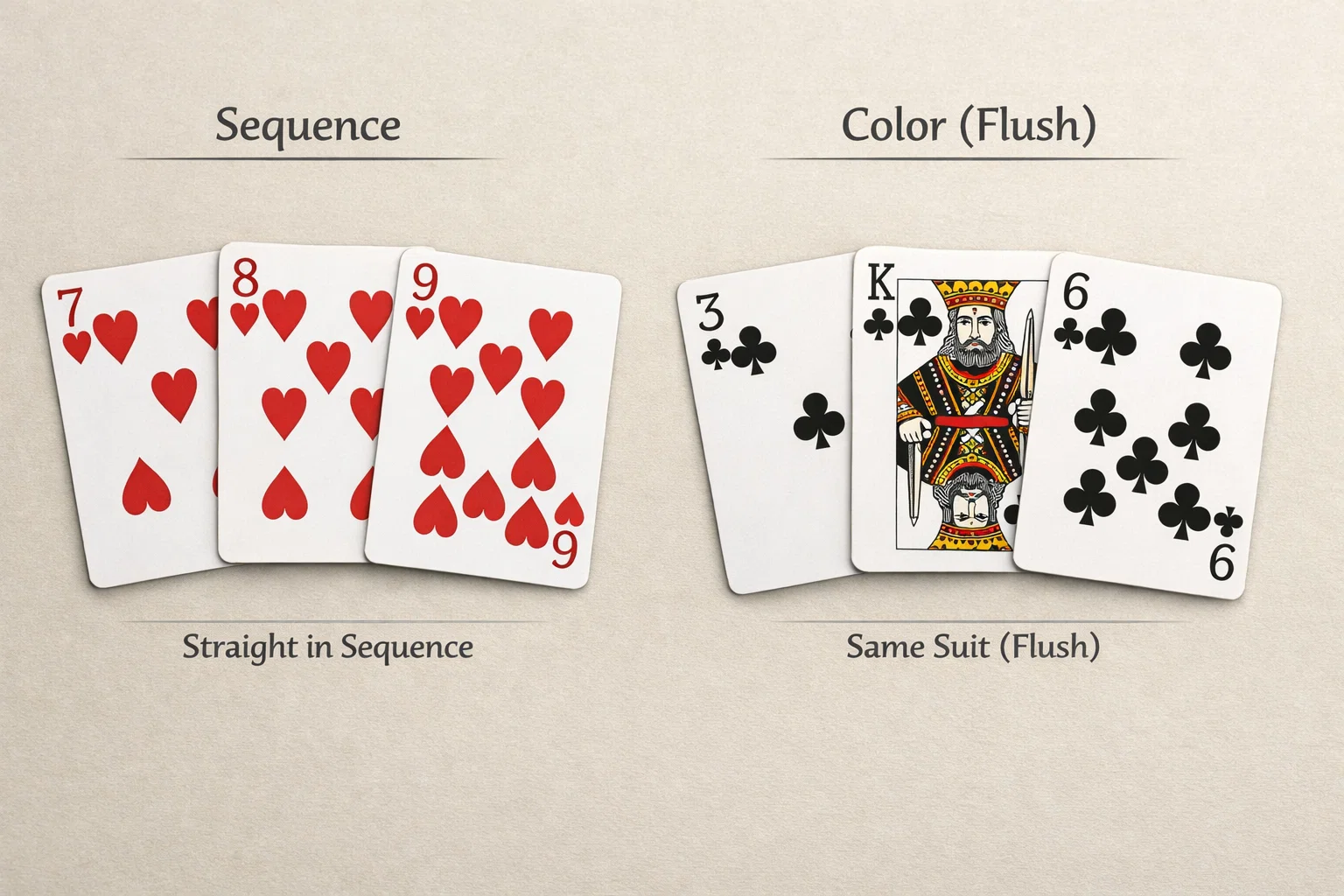
• In standard teen patti indian poker, a Sequence outranks a Color (Flush)—that’s a key difference from traditional Texas Hold’em.
• The Ace acts as a “swing” card, forming both the highest (A-K-Q) and the second-highest (A-2-3) sequences in most 3 patti variations.
• Understanding local terminology like single pana or total pana can help you navigate different teen patti variations more effectively.
Teen Patti is the heartbeat of Indian card gaming. Whether you’re playing on a physical table or enjoying a round of teen patti live, the excitement of the “show” is unmatched. If you want to win consistently, you’ve got to have the hand rankings memorized. This is the foundation of every card patti session—it’s what helps you decide whether to play “Blind” or “Seen.”
If you’re a fan of 3 patti octro or you enjoy the competitive nature of a teen patti by octro indian poker card game, you already know that one wrong move can cost you the pot. This guide is meant to be your ultimate reference for the 52 patti game rankings, so you never confuse a teen patti flash with a Pure Sequence again.
Teen Patti Hand Ranking Order (Quick Chart)
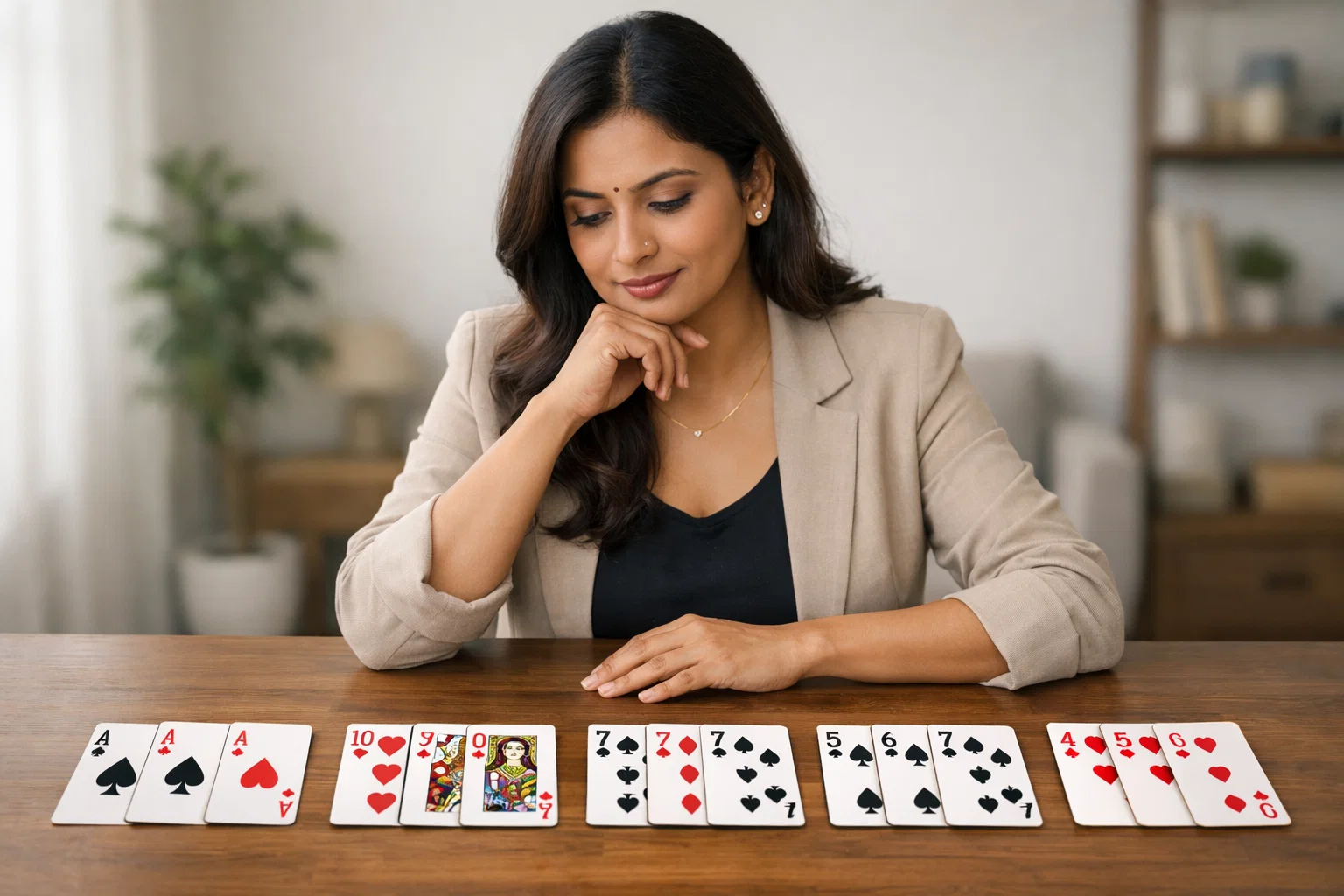
Below is the definitive hierarchy of hands used in teen patti indian poker. From the unbeatable Trio to the humble High Card, this chart covers everything. A lot of players look for a teen patti photo or a teen patti image to keep as a reference—this table serves that exact purpose.
| Rank | Hand Name | Official Name | Example |
| 1 | Trail / Trio | Three of a Kind | A♣ A♠ A♥ |
| 2 | Pure Sequence | Straight Flush | 10♦ J♦ Q♦ |
| 3 | Sequence | Straight / Run | 9♠ 10♥ J♣ |
| 4 | Color / Flash | Flush | K♥ 7♥ 2♥ |
| 5 | Pair | Two of a Kind | 8♣ 8♦ 3♠ |
| 6 | High Card | No Match | A♠ J♥ 4♣ |
What Is Trail (Trio/Set)? (Examples)
The Trail, also known in many circles as a Set or Trio, is the king of the card patti game. It happens when you’re holding three cards of the identical rank.
• A-A-A: The highest possible hand. If you’ve got this, you’re pretty much guaranteed a win—unless you’re playing specific teen patti variations where wild cards are involved.
• 2-2-2: The lowest Trail, but it still beats any Pure Sequence or Color.
In a 52 patti game, the probability of hitting a Trail is pretty low—that’s why it sits at the top. If two players happen to have a Trail, the one with the higher-valued cards wins (K-K-K beats J-J-J, for example).
Pure Sequence vs Sequence (Biggest Confusion)
New players often struggle to tell these two apart, especially when playing teen patti by octro indian poker. Both involve three consecutive cards, but the suits play a massive role in their strength.
Pure Sequence
A Pure Sequence is three consecutive cards that all belong to the same suit. This is the second-highest hand. Like the 4, 5, and 6 of Spades, for instance. A lot of players searching for teen patti rules in hindi refer to this as the “Pakki Sequence.”
Sequence (Run)
A standard Sequence, or “Run,” is three consecutive cards of different suits. Say, a 5 of Hearts, a 6 of Diamonds, and a 7 of Clubs. In the world of live 3 patti, a Sequence is a strong hand but will always lose to a Pure Sequence.
Sequence vs Color (Which is bigger?)
This trips up a lot of beginners. If you’ve got a teen patti flush (three cards of the same suit), you might think it’s super strong. But here’s the thing—in the standard teen patti by octro indian poker rules, a Sequence is actually harder to get than a Color.
• Sequence (Run): Beats a Color.
• Color (teen patti flash): Beats a Pair.
So if you’re holding a K-Q-J of mixed suits and your opponent has an Ace-high teen patti flash (all Hearts), you take the pot. Knowing this hierarchy is vital when you’re making a heavy “chaal.”
Pair vs High Card (How tie-break works)
When the cards aren’t in order and the suits don’t match, you’re probably looking at a Pair or a High Card.
The Pair
A Pair means you’ve got two cards of the same rank and one odd card.
• Rank Comparison: An A-A-K is the highest pair, while 2-2-3 is the lowest.
• The Kicker: If both players have the same pair (like both have 10-10), the third card—known as the kicker—determines the winner. A 10-10-9 beats a 10-10-8.
The High Card
This is the “weakest hand” in the game. If nobody has a pair or better, the hand with the highest-ranking card wins. If both have the same high card, you compare the next highest card.
Ace Rule for Sequences (A-K-Q vs A-2-3)
The Ace is the most versatile card in teen patti indian poker. It can be used to form the highest and the second-highest runs.
• A-K-Q: The highest sequence in the game.
• A-2-3: Often considered the second-highest sequence.
• K-Q-J: The third-highest sequence.
Be careful though—some 3 patti variations might treat A-2-3 as the lowest sequence. If you’re learning how to play teen patti in hindi, always check the table rules regarding the Ace’s behavior in a run.
Understanding Panna and Local Terminology
While standard rankings are used in teen patti live, many Indian players also get into games involving a panna number or total pana. These terms often cross over from Matka games into local patti variations.
• Single Pana: Refers to a combination where all three cards are different.
• Double Pana: When two cards are the same (similar to a Pair).
• Triple Pana: When all three cards are the same (equivalent to a Trail).
• Total Pana / Total Panel: The sum of the card values, which gets used in side-bets or specific teen patti variations.
• 6 ki patti: Refers to specific hand combinations involving the number 6, often seen in regional betting.
• Matka Total Pana: A calculation of the three-card sum used primarily in betting markets rather than standard poker play.
Understanding these terms like sp patti or total panel helps you communicate better at local tables, even if they aren’t part of the core 3 patti octro digital rules.
Strategy for Different Variations
The game changes significantly when you move from standard play to teen patti variations.
• Muflis: In this mode, the rankings are reversed. The High Card becomes the strongest, and the Trail becomes the weakest.
• AK47: In this variation, all Aces, Kings, 4s, and 7s are wild cards (Jokers). This makes hitting a Trail way easier.
• Live 3 Patti Tips: When playing teen patti live, pay attention to the speed of bets. Digital platforms move fast, and players often use the teen patti image references to make split-second decisions.
FAQ (Frequently Asked Questions)
Which is highest in teen patti? The highest hand is a Trail of three Aces (A-A-A).
Is sequence bigger than color? Yes, a Sequence (Run) always beats a Color (Flush/Flash) in standard rules.
Is A-2-3 a sequence? Yes, A-2-3 is a valid sequence and is usually ranked as the second-highest sequence after A-K-Q.
What is the weakest hand? The weakest hand is a High Card—specifically a hand like 5-3-2 of different suits.
Where can I find teen patti rules in hindi? Most major platforms like TP Master offer a 3 patti rules in hindi section in their help menu for players who prefer local languages.
What is the difference between teen patti flush and flash? There’s no difference—teen patti flush and teen patti flash are both terms for three cards of the same suit.
Conclusion
Mastering the hand rankings is only the beginning of your journey in the card patti game. Whether you’re studying a teen patti photo to memorize the order or practicing on teen patti live, the key is consistency. Knowing when your single pana or panna number is strong enough to bet big is what separates the winners from the losers.
Keep this guide bookmarked for your next session on TP Master, and remember—in the world of teen patti indian poker, knowledge is your strongest card.
About the Author
Ishaan “The Dealer” Sharma
Ishaan is a professional card game analyst and veteran strategist with over 15 years of experience in the Indian card gaming circuit. Based in Delhi, he has competed in high-stakes teen patti tournaments and has contributed extensively to the evolution of teen patti strategy guides. When he isn’t analyzing the latest 3 patti variations, he can be found exploring the intricate bidding mechanics of the 29 card game.