
Teen Patti Sideshow Rules: Complete Guide
Teen Patti is a game of skill, psychology, and sometimes, pure guts. Everyone knows how to play teen patti—place a bet (chaal), go “Blind,” the usual stuff. But the sideshow? That’s where the real strategy happens. It’s the ultimate tool for a player who wants to stay in the game but isn’t quite ready to commit their entire stack to a final “Show.”
If you’ve ever been confused about why you couldn’t ask for a sideshow while playing Blind, or why your opponent suddenly disappeared from the hand after a private whisper—this guide is for you. Whether you’re learning how to play 3 patti or brushing up on the teen patti rules, we’ve got you covered.
Key Takeaways
• Only Seen players can initiate a sideshow; Blind players are strictly prohibited from this move.
• A sideshow is a private comparison between two adjacent players; the rest of the table doesn’t see the cards.
• The requested player has every right to reject the sideshow without any penalty or obligation.
• The player with the weaker hand must fold immediately, while the winner continues the round.
• It’s a vital risk-management tactic used to eliminate competition before the pot gets too expensive.
What Is Sideshow in Teen Patti? (Meaning Explained Simply)
In the simplest terms, a sideshow is a private duel in the middle of a hand. Unlike a regular “Show”—which happens at the very end and involves everyone revealing their 3 patti cards to determine a winner—a sideshow is a localized event.
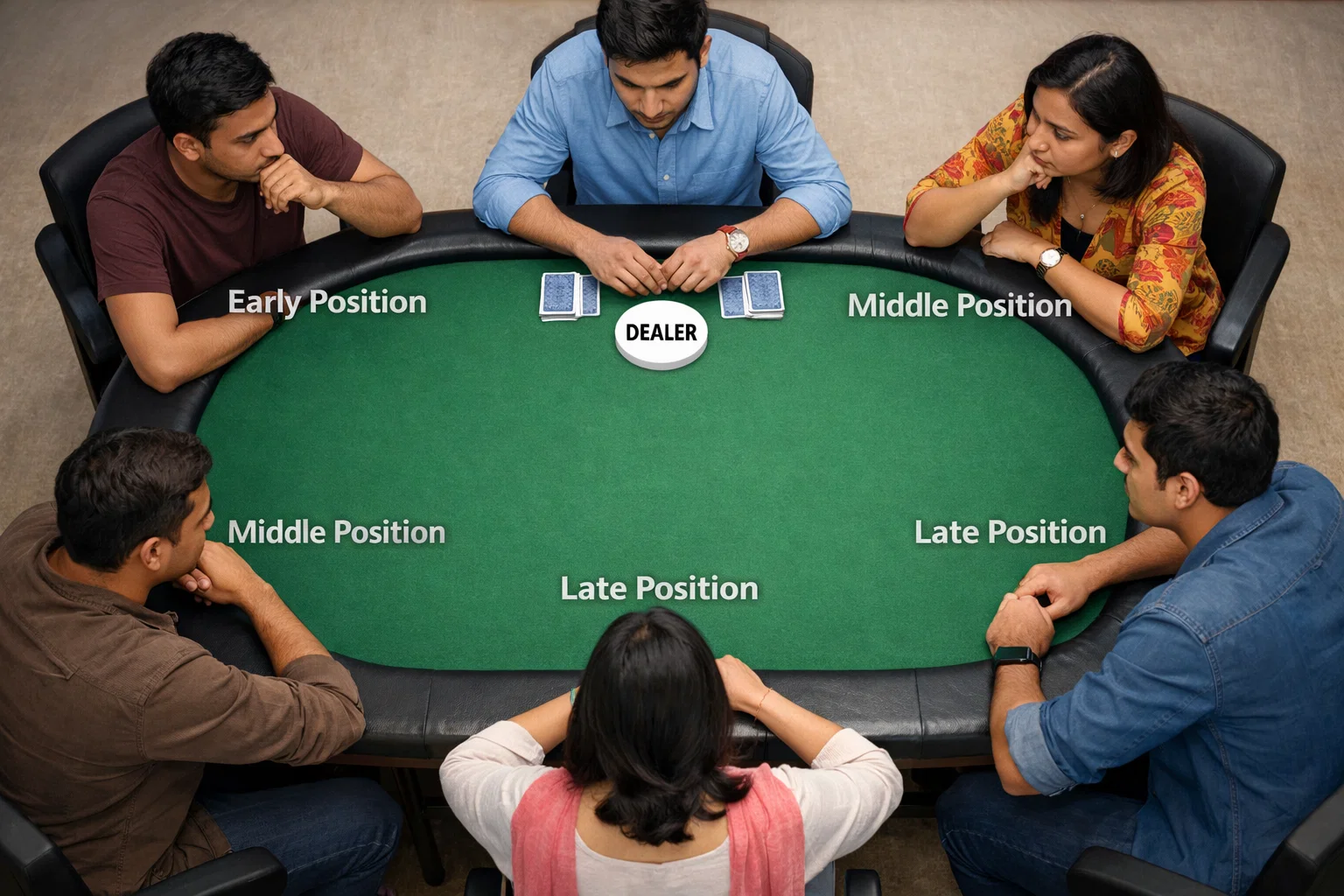
The primary purpose of a sideshow is to reduce risk. When you’re unsure if your hand is strong enough to beat everyone at the 3 patti table, you can ask the person who played just before you to compare cards privately.
How it works: If the person accepts, you both look at each other’s cards. Whoever has the lower-ranking 3 patti sequence or card must fold their cards instantly. The winner keeps their cards hidden from the rest of the players and continues playing like nothing happened. This lets you knock out a rival and gain confidence without the whole table knowing what you’re holding.
Who Can Ask for Sideshow? (Blind vs Seen Rule)
One of the most common points of confusion in the teen patti game rules is the eligibility for a sideshow. The rule is very strict and non-negotiable across all teen patti variations, whether you’re playing a home game or on apps like 3 patti octro.
Only Seen players can ask for a sideshow.
If you’re playing Blind, you can’t ask for a sideshow. The logic is simple: a Blind player is already playing at a lower cost (half the current bet) and hasn’t seen their teen patti card. Allowing a Blind player to compare cards would break the fundamental balance of the game.
Once you decide to “See” your cards, you transition from a Blind player to a Seen player. Only at this point do you gain the tactical advantage of requesting a comparison with the player who moved immediately before you. This is part of the core 3 patti rules you’ll find in any 3 patti rules pdf.
Step-by-Step: How Sideshow Works in Teen Patti
Requesting a sideshow isn’t just about speaking up—there’s a specific sequence of events you’ve got to follow to keep the game fair. Here’s how to play teen patti game sideshows properly:
1. You must be a Seen player: You can’t request a sideshow until you’ve looked at your cards and are playing “Chaal.”
2. Place your bet first: You’ve got to put the current minimum bet into the pot before you can ask for the sideshow. No “free” peeks allowed.
3. Request your predecessor: You can only ask for a sideshow from the player who placed their bet immediately before you. Can’t jump across the table to ask someone else.
4. The player must be “Seen”: You can’t ask a Blind player for a sideshow. Both parties have to have seen their cards.
5. The Choice: The player you asked can either Accept or Reject.
If they Accept: You both show each other your cards privately. The player with the lower-ranking hand (based on standard teen patti sequence like Trail, Pure Sequence, or Color) must fold. If the hands are exactly equal, the person who requested the sideshow must fold.
If they Reject: The game continues as usual. You stay in the hand, and the turn moves to the next player.
Can the Other Player Reject a Sideshow?
Yes, the other player has every right to say “No.” In fact, rejecting a sideshow is a strategic move in itself.
There’s no penalty for rejecting a sideshow. If a player feels they’ve got a very strong 3 patti hands and wants to keep you in the pot to collect more money, they might reject your request. Or they might reject it because they want to keep their own hand a total mystery for a few more rounds.
Strategy Tip: If you notice a player frequently rejects sideshow requests, it usually means they’re playing very aggressively or trying to hide a bluff. On the flip side, if you’re always the one being rejected, it might be a sign that your table image is too strong—people are afraid to compare cards with you!
Sideshow vs Show: What’s the Difference?
While they sound similar, they serve completely different purposes in a round of 3 patti in english (or three patti rules if you prefer).
| Feature | Sideshow | Show |
| Players Involved | 2 players (Private) | All remaining players (Public) |
| Cards Revealed | Only to the 2 people involved | To the entire table |
| When it Happens | During the middle of the round | At the end of the round |
| Who Can Request | Seen players only | Any active player (conditions apply) |
| Objective | To eliminate one rival | To win the entire pot |
When Should You Ask for Sideshow? (Best Situations)
Knowing how to ask is easy; knowing when to ask is what makes you a pro. Here are three scenarios where a sideshow is your best friend:
1. Only 3 Players are Left
When the field’s narrowed down to just three people, the tension is high. By asking for a sideshow with the player before you, you can potentially turn the game into a 1-on-1 duel. Eliminating that third person early reduces the “chaos factor” and lets you focus on beating just one opponent. This is a key part of understanding the teen patti hierarchy of play.
2. You Have a Medium-Strength Hand
If you’ve got a mid-range hand like a low Pair or a simple Color (Flush), you’re in a “danger zone.” Not strong enough to comfortably bet big until the end, but not weak enough to fold either. A sideshow lets you see if you can at least beat one other person before you “burn” more money in the pot. Check the 3 patti sequence list to know where you stand.
3. The Opponent is Betting Aggressively
Is the player before you betting like they’ve got the highest sequence in 3 patti, or are they just bluffing? A sideshow request is a great way to “price check” them. If they accept and you win, you’ve successfully stopped a bluff. If they reject, you know they’re serious about their hand.
When You Should NOT Ask for Sideshow
Sometimes, asking for a sideshow is a rookie mistake that gives away your position.
• When your hand is very weak: If you’re holding high-card junk, don’t waste money on a sideshow. Just fold. A sideshow still requires you to put money in the pot, and if you know you’re going to lose the comparison, you’re just throwing money away.
• When the pot is very small: If the “Chaal” is still at the starting limit, there’s no rush. Let the pot grow a bit. Asking for a sideshow too early tells everyone you’re nervous about your hand.
• When the opponent is a “Rock”: If the player before you only bets when they have a Pure Sequence or higher based on the 3 patti ranking, don’t ask for a sideshow. You already know they’ve got a better hand than your Pair of Jacks.
Common Sideshow Mistakes Indian Players Make
Even experienced players occasionally trip up on the nuances. Whether you’re playing live 3 patti or teen patti live, avoid these common pitfalls:
• Trying to sideshow a Blind player: This is the #1 mistake in local games. You simply can’t do it. If the person before you is playing Blind, you’ve got to wait until they “See” or until the turn passes to another Seen player.
• Asking the wrong person: You can only ask the person who played immediately before you. Can’t ask the person who plays after you.
• Using it as a “Win Button”: A sideshow is a comparison, not a victory. A lot of players ask for a sideshow thinking it’ll save them, only to realize their “High Card” was never going to win anyway.
• Ignoring the “Equal Hand” rule: Remember—if you ask for the sideshow and your cards are identical to your opponent’s, you lose. The requester always loses in a tie.
Understanding the Hierarchy: What Wins in a Sideshow?
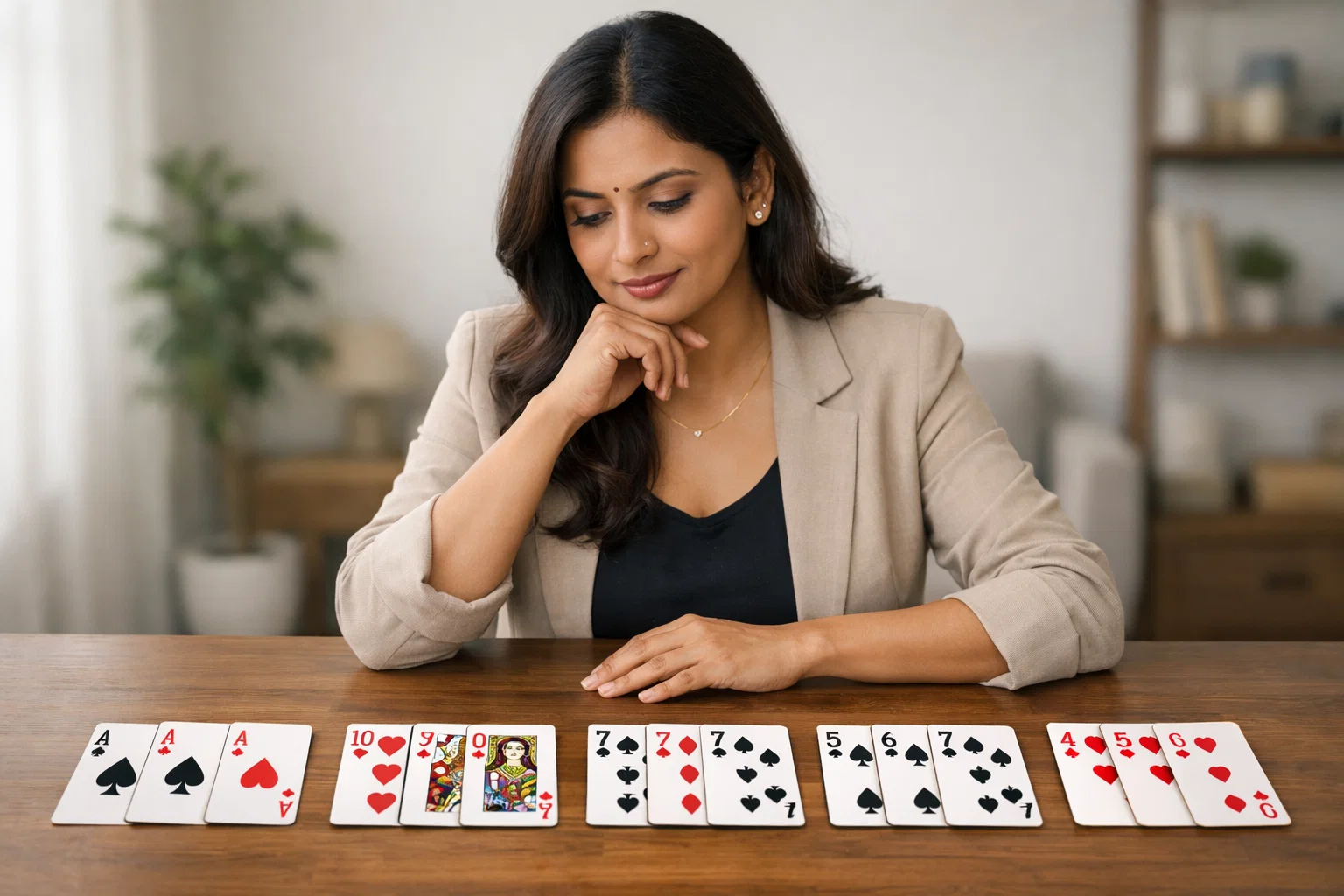
Before you even think about asking for a comparison, you need to know where your hand stands in the teen patti ranking. Whether it’s a sideshow or a final show, the teen patti order (or 3 patti order) remains the same:
• Trail or Set: Three cards of the same rank (Aces are highest). This is the biggest sequence in 3 patti.
• Pure Sequence: Three consecutive cards of the same suit. Part of the 3 patti winning sequence list.
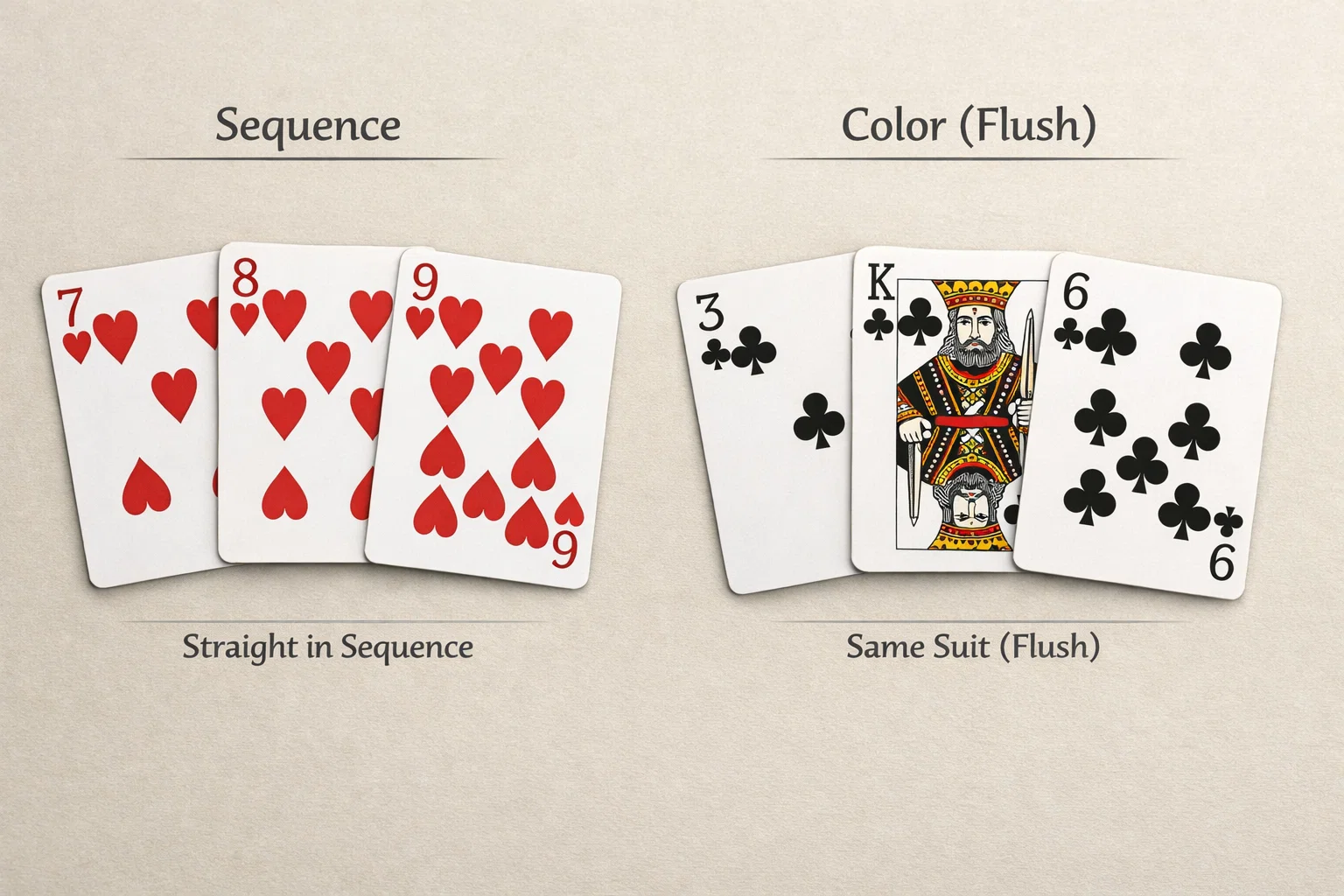
• Sequence (Run): Three consecutive cards of different suits. A solid 3 patti card sequence.
• Color (Flush): Three cards of the same suit but not in sequence.
• Pair: Two cards of the same rank.
• High Card: When you’ve got none of the above, the highest card in 3 patti wins.
If you’ve got a Pair of Kings, you should feel relatively confident asking for a sideshow. If you’ve got a High Card 10, you should probably stay away from that sideshow button! Check any 3 patti rules chart or teen patti image for reference.
FAQ
Q1. Can a Blind player ask for sideshow in Teen Patti? No. The 3 patti card rules state that only Seen players are eligible to request a sideshow. Blind players must either continue playing Blind or see their cards first.
Q2. Is sideshow available in online Teen Patti apps? Yes, almost all reputable platforms like octro teen patti apk, Teen Patti Gold, and teen patti by octro indian poker card game follow these standard rules. Usually, a “Sideshow” button will appear on your screen when it’s your turn, provided the person before you is also a Seen player. You can try teen patti octro download to practice.
Q3. Can the opponent refuse a sideshow? Absolutely. The opponent can reject the request. If they do, the game continues normally, and you must decide whether to place a Chaal or fold.
Q4. Is sideshow better than show? Depends on your strategy. A sideshow is better for early-game risk management, while a show is the only way to officially end the round and claim the pot when only two players are left.
Q5. What happens if the cards are a tie in a sideshow? In the event of a tie during a sideshow, the player who requested the sideshow is declared the loser and must fold their cards.
The Final Word on Sideshows
Mastering the sideshow is what separates a casual card patti game player from a seasoned pro. It’s a tool of information and elimination. By using it wisely, you can protect your chips when you’re unsure and clear the path to the pot when you’ve got a solid teen patti hands.
Next time you’re sitting at the table (online or offline), keep a close eye on the person to your right. If they’ve seen their cards and you’re feeling bold, that “Sideshow” button might just be your best move. Whether you’re exploring 3 patti variations, trying out the 6 patti game, or playing on teen patti indian poker platforms—sideshows are your secret weapon.
For more references, look up any teen patti photo guide, check out octro teen patti mod apk versions for practice, or even find 3 patti old version 2018 to see how the rules have evolved in the card patti world. The 3 patti series of games all follow similar teen patti by octro indian poker rules.
About the Author
Rahul Sharma is a veteran card game analyst and Teen Patti enthusiast with over a decade of experience in traditional Indian card games. He specializes in probability-based strategies and has contributed to several leading gaming platforms across India.