Someone texts you “bingo,” but there is no numbered card, caller, or bingo hall anywhere in sight. In a chat or conversation, the word can mean something completely different from the familiar game.
Bingo has two common meanings. It can refer to the game itself, where players mark numbers on a card as they are called. It can also be an exclamation used when someone gets the exact answer, finds what they were looking for, or realises something is correct.
The meaning becomes clear from the context. Here, you’ll learn what bingo means, where the word originated, how people use it in texting and everyday conversations, and how it compares with expressions such as “eureka” and “jackpot.”

General Meaning of Bingo
The most common meaning of bingo is the name of a game where players mark numbers on cards as they are called. The goal is usually to complete a set pattern and call out Bingo! before the other players.
There are different versions of the game. The cards, number ranges, and winning patterns can change depending on the version being played.
You may come across:
- 75-ball bingo
- 80-ball bingo
- 90-ball bingo
- Online bingo games
- Community or charity bingo
- Different local versions of bingo
The basic idea stays easy to understand. Numbers are called, players check their cards, and someone wins after completing the required pattern.
That is why bingo is usually easy for beginners to learn. The rules can change between versions, but the basic rhythm stays familiar.
The word bingo can also be used outside the game. When someone says Bingo! after hearing an answer, they usually mean they have found the right answer or that something is exactly correct.
For example:
“So the meeting is at 3 p.m. tomorrow?”
“Bingo!”
Here, nobody is talking about a bingo card. The person simply means, “Yes, that’s correct.”
Where the Word “Bingo” Comes From
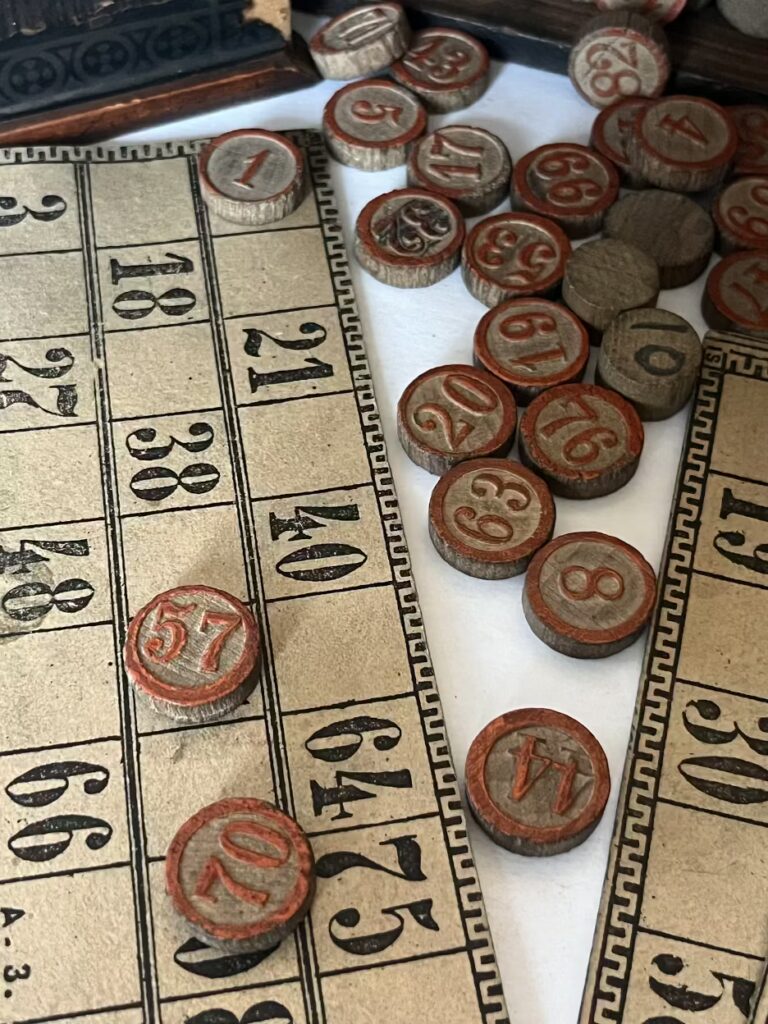
The game itself goes back to 1530s Italy, where there was a national lottery called “Lo Giuoco del Lotto d’Italia.” Players covered numbered squares as winning numbers were drawn from a sack. This is still the basic setup used in bingo today.
From there, the game spread to France in the late 1770s as “Le Lotto.” It was played with cards set out in three rows and nine columns, with numbers from one to 90. That layout is still the basis of 90-ball bingo, which is common in the UK and in India’s Tambola.
By the early 1900s, the game had reached American carnivals under the name “Beano.” Players covered numbers with dried beans. That story is fun, but it is probably just a legend. Merriam-Webster traces the interjection “bingo” back to 1903, as a change from “bing,” a word meant to sound like a ringing bell.
That was years before Lowe ran his first game. The word “bingo” was also already being used in Great Britain in the 1770s. So, the name almost certainly existed before it became linked to the game we know today.
The game’s structure has its own history, separate from the name. A carnival operator named Hugh J. Ward standardized the rules and cards around Pittsburgh in the early 1920s. He later copyrighted “Bingo” and published an official rulebook in 1933. Lowe then hired Columbia University math professor Carl Leffler to design thousands of different card combinations. This helped reduce the chances of two players winning the same round.
Bingo spread outside the US in its own way. In the UK, Mecca Bingo started running the game for cash prizes in dance halls in 1960. This helped turn bingo from a carnival game into a regular night out. The same 90-ball format, based on France’s 18th-century “Le Lotto,” is still used by most UK players and India’s Tambola players.
Curious about bingo? Read Bingo: The Complete Guide → Learn how the game works, explore its formats, and see what makes each one unique.

Bingo Meaning in Chat & Texting
Long before group chats existed, people were already saying “bingo” out loud in the same way they text it now. Someone gives you the right tool on the first try, and you say “bingo” instead of “thanks, that’s it.”
A recipe finally turns out right after three tries, and “bingo” sums up the moment better than a full sentence. That everyday habit carried straight into texting.
In chat, bingo has nothing to do with the game.
People often use it when someone gets the right answer, understands a point, or finds exactly what they were looking for. It works much like saying “exactly,” “correct,” “that’s it,” or “you got it.”
For example:
Person A: “You mean the blue file, right?”
Person B: “Bingo.”
Here, “bingo” means the second person has confirmed the answer.
It can also show excitement when someone finally solves a problem.
Person A: “I changed the setting and the app started working.”
Person B: “Bingo! That was the problem.”
The word is useful because it is short and clear. Instead of writing a full sentence like “Yes, you have understood the problem correctly,” someone can simply write “Bingo!”
You may see it written with or without an exclamation mark:
- Bingo! = more excited
- Bingo = more casual
- Yep, bingo = relaxed agreement
- Bingo, that’s it = confirming an answer
This use comes from the word’s long history as an expression of sudden success or recognition. It is an example of how a word connected to a game can also become part of everyday speech.
Real Chat Examples
| Chat Snippet | What “Bingo” Means Here |
| “Is it the blue one?” “Bingo, that’s it.” | Confirming a correct guess |
| “Found the missing invoice. Bingo!” | Announcing something was located |
| “Bingo, that restaurant has outdoor seating too.” | Reacting to an option that fits perfectly |
| “Try the third password… bingo, we’re in.” | Marking a successful attempt |
| “Bingo, that’s the exact shade I meant.” | Spotting the exact right option |
| “He remembered the code on the second guess. Bingo.” | Reacting to someone else’s quick success |
Notice none of these examples need extra explanation. “Bingo” does the work of an entire sentence, which is exactly why it holds up so well in a fast-moving chat thread.
Want to play a round instead of just texting about it? Our How to Play Bingo: 7 Simple Steps guide gets you started in minutes.
Bingo vs Other Slang
“Bingo” is not the only word people reach for in these moments. Here is how it compares to a few similar expressions.
| Slang | Typical Meaning | Best Used When |
| Bingo | Exactly right, or found it | Confirming a guess or a match |
| Eureka | A sudden, often bigger realization | A breakthrough moment or big idea |
| Jackpot | Landing something valuable | Getting a lucky or rewarding outcome |
| Bullseye | Precisely on target | Nailing an exact answer or aim |
| Gotcha | Understood, or caught something | Confirming understanding quickly |
| Nailed it | Did something exactly right | Praising a precise, skillful result |
The main difference is tone.
It is simple and direct. It shows that you understand something. Nailed it often sounds more exciting and can praise someone for getting something right.
Bingo sits somewhere in the middle. It is short, casual, and often has a little more energy than a simple “yes.”
For example:
“Did I find the right setting?”
“Bingo!” That sounds more lively than simply saying “Yes.”
FAQs
Can “bingo” be used sarcastically?
Yes. It can point out an obvious or overly convenient answer, said in a flatter tone to signal “of course that’s what happened,” rather than genuine excitement.
Why do people say bingo when they get something right?
The word is used as an expression of sudden recognition or success. Its exact history is not completely certain, but this use is closely connected with the word’s older exclamatory sense.
Where did the bingo game start?
The game has roots in an Italian lottery game from the 1500s. It later spread across Europe before versions reached the United States.
What was bingo called before bingo?
One American version was called Beano. Players used dried beans to mark numbers on their cards. Edwin S. Lowe later helped popularize the game under the name Bingo.
What does human bingo mean?
Human bingo is a social game where players use cards with facts or descriptions. They talk to other people to find someone who matches each item.
Is bingo the same in every country?
No. Different places use different bingo formats, card layouts, number ranges, and winning patterns. The basic idea is similar, but the rules can change.
Conclusion
Now that you know what bingo means, where the word came from, and how people use it in chats, you have the basics covered. The meaning can change with the situation, but the common uses are easy to understand once you know them.
Next time it lands in your inbox, you will know exactly which version of “bingo” you are getting, and why the word has stuck around this long.
Curious how the numbers game behind all of this actually works? Bingo: The Complete Guide covers every variant, rule, and pattern in one place.
Download the Best Bingo Apps Today!
About the Author

Aditya has been covering real-money gaming apps since 2020. He reviews bonus structures, withdrawal processes, and platform safety so readers can make decisions based on verified facts rather than marketing copy.