
Key Takeaways
The Show is the final showdown and can only happen when exactly two players are left.
Unlike a private Sideshow, a Show requires both players to reveal their 3 patti cards to the entire table.
A seen player must pay the current stake to request a show, while a blind player cannot usually initiate one.
Timing a show is a psychological art; doing it too early might minimize your winnings with a highest sequence in 3 patti.
In the event of a tie during a show, the player who did not request the show is declared the winner.
When to Show in Teen Patti
Teen Patti, often called the Indian version of poker, is a game of skill, nerve, and perfect timing. Whether you are playing a traditional patti game at a family gathering or testing your luck on a teen patti online game, the “Show” is the most critical moment. It is the point where the betting stops and the winner is decided.
For those looking to dominate the 3 patti real cash tables, understanding when and how to request a show is vital. Many players who complete a teen patti download and jump straight into the action lose money simply because they don’t fully understand the nuance of this final move.
What Is “Show” in Teen Patti?
In any teen patti game, the “Show” refers to the final comparison of cards. While many players use the terms interchangeably, a Show is distinct from a sideshow—and confusing the two is a common mistake I see all the time.
The Final Act: A show represents the end of the round. It occurs only when the field of players has been whittled down to just two participants.
Total Transparency: During a show, both players must reveal their teen patti card combinations. This is not a private look; everyone who was part of the 3 patti table (even those who folded) gets to see the cards.
The Difference from Sideshow: A sideshow is a request made while three or more players are still active. It is a private comparison between two adjacent players. If the request is accepted, the person with the lower 3 patti ranking folds. If it is a show, however, the game ends immediately after the reveal.
The 52 Patti Game Standard: Most variations, including 6 patti game or the classic card patti, use a standard deck. The rules of the show remain the foundation of the teen patti hierarchy.
Who Can Ask for a Show?
The rules regarding who can call for a show are designed to keep the indian teen patti experience balanced between those playing “Blind” and those playing “Seen.”
Blind Player Rules
If you are a blind player, you are betting without looking at your cards. Because you are taking a higher risk, your betting costs are lower (usually half of a seen player). However, the trade-off is that a blind player cannot ask for a show. The game must continue until you either become a seen player or the other player initiates the show.
Seen Player Rules
A seen player can ask for a show, but only if the other remaining player is also a seen player. If a seen player wants to challenge a blind player to a show, the rules change significantly. In many 3 patti online game formats, a seen player must pay four times the current stake to force a show against a blind player—though I’ve noticed some platforms handle this differently, so always check the house rules.
It Must Be Your Turn
You cannot shout “Show!” whenever you feel a surge of confidence. You must wait for the 3 patti poker rotation to reach you. You can only request a show when it is your turn to bet.
The Cost of Entry
To trigger a show, you must place a final bet into the pot. If both players are seen, the one requesting the show pays the current bet amount. This is effectively the “price” for ending the game and seeing the opponent’s 3 patti card sequence.
When Should You Show in Teen Patti?
This is the core of the how to play 3 patti strategy. Knowing the teen patti rules is one thing; knowing the math of the pot is another.
Situation 1: Only Two Players Remain
This is the most obvious requirement. If you are in a live 3 patti session and there are three of you, a show is not an option. You must either keep betting to force someone out or ask for a sideshow.
Situation 2: You Hold a Strong Sequence
If you are looking at a 3 patti sequence like a Trail (three of a kind) or a Pure Sequence, you have a high chance of winning. However, if the other player is also betting aggressively, they might have a strong hand too. If the pot has reached a size you are comfortable with, calling a show secures the win before the stakes get uncomfortably high.
Situation 3: Assessing the Opponent’s Betting
In real 3 patti, players often bluff. If you have a mid-range hand—perhaps a Pair or a high card patti game Color—and your opponent has been betting consistently but not raising the stakes, they might be waiting for you to fold. A show ends the bluffing game. In my experience, this is where reads matter more than cards.
When NOT to Show
One of the biggest mistakes in teen patti gold game play is showing too early when you have the biggest sequence in 3 patti. If you have an unbeatable hand, your goal is to keep the other player in the game for as long as possible. Let them raise. Let them think they have a chance. Only show when they stop raising or when you feel they are about to fold.
Show vs Sideshow: When to Use Which?
Understanding the tactical difference is key for anyone using a teen patti app download.
| Strategy Factor | Sideshow (Compromise) | Show (Final Showdown) |
| Participant Count | Used when 3+ players are active. | Used when only 2 players are active. |
| Information Gain | Private; only you and one other see cards. | Public; everyone sees the winning 3 patti hands. |
| Risk Level | Lower; you can continue if you win. | Absolute; determines the winner of the total pot. |
| Acceptance | Opponent can refuse the request. | Mandatory; once the fee is paid, the show must happen. |
Many players who enjoy teen patti rummy or 3teen patti often confuse these. Remember, a sideshow is a tool to narrow the field, while a show is the tool to claim the prize.
Common Show Mistakes Beginners Make
If you are new to the teen patti com ecosystem or just finished your 3 patti game download, avoid these common pitfalls:
Showing before the “Heads-Up”: You cannot force a show when three people are playing. If you try, you are essentially giving away information about your 3 patti order strength without any benefit.
The “Blind” Show Confusion: Beginners often think they can stay blind and ask for a show to keep their costs low. As discussed, you usually have to “See” your cards before the show button becomes available in a teen patti video game.
Ignoring the Tie Rule: This is a crucial part of teen patti game rules. If both players have the exact same teen patti ranking, the person who asked for the show loses. If you think you both have an Ace-high Flush, it is better to let the other person call the show.
Using Show as a “Panic Button”: Just because the pot is getting large doesn’t mean you should show. If your 3 patti series is weak, showing just guarantees you lose your stake. Folding is a respectable part of how to play teen patti.
Slow Loading Errors: In teen patti game loading scenarios on mobile apps, sometimes players double-tap and accidentally request a show when they meant to raise. Always be deliberate with your taps in a teen patti live environment—this happens more often than you’d think.
How to Play Teen Patti: A Quick Refresher on Rankings
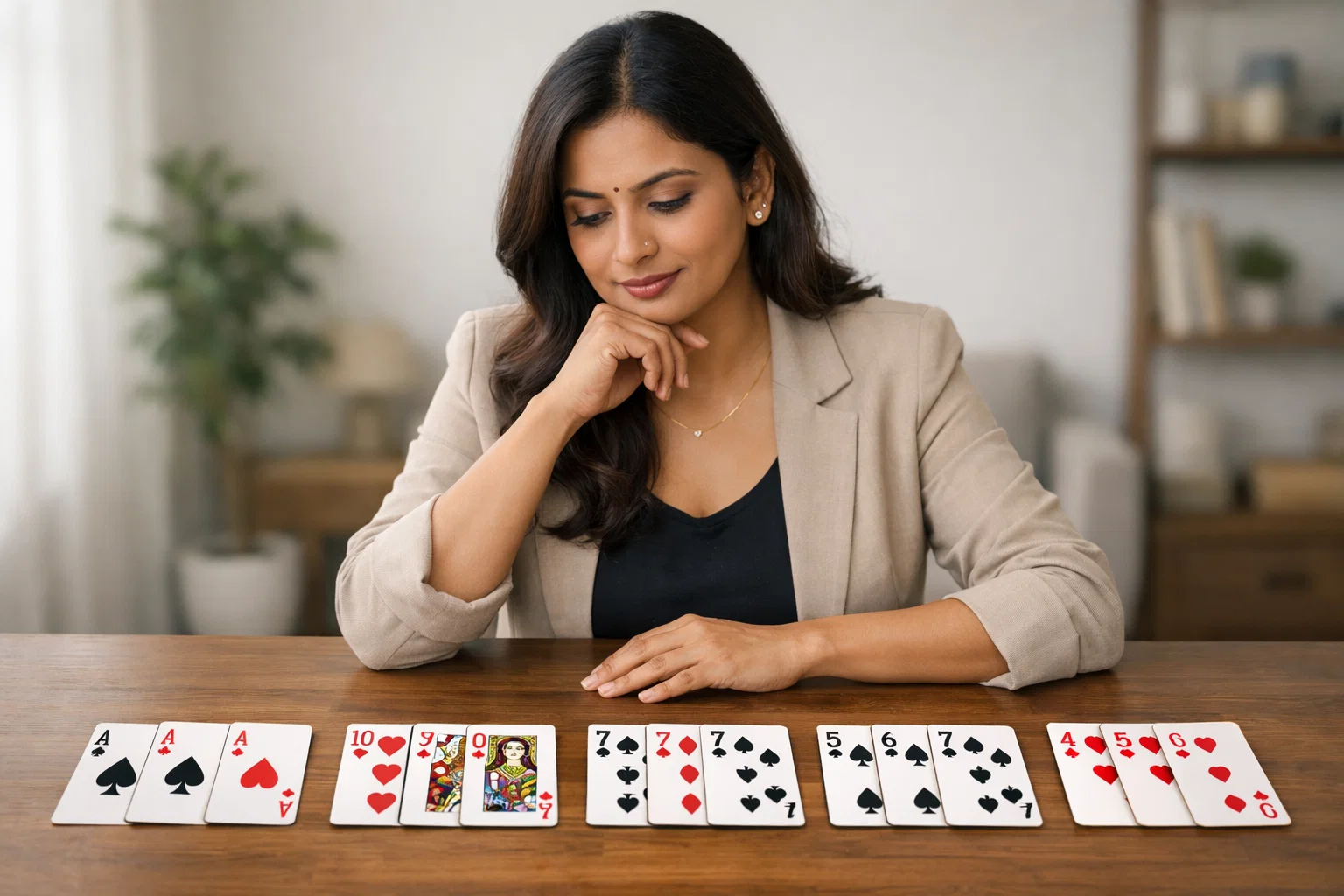
To know when to show, you must know your 3 patti sequence list. Here is the teen patti order from highest to lowest:
Trail or Set: Three cards of the same rank. (e.g., Three Aces is the highest card in 3 patti).
Pure Sequence: Three consecutive cards of the same suit.
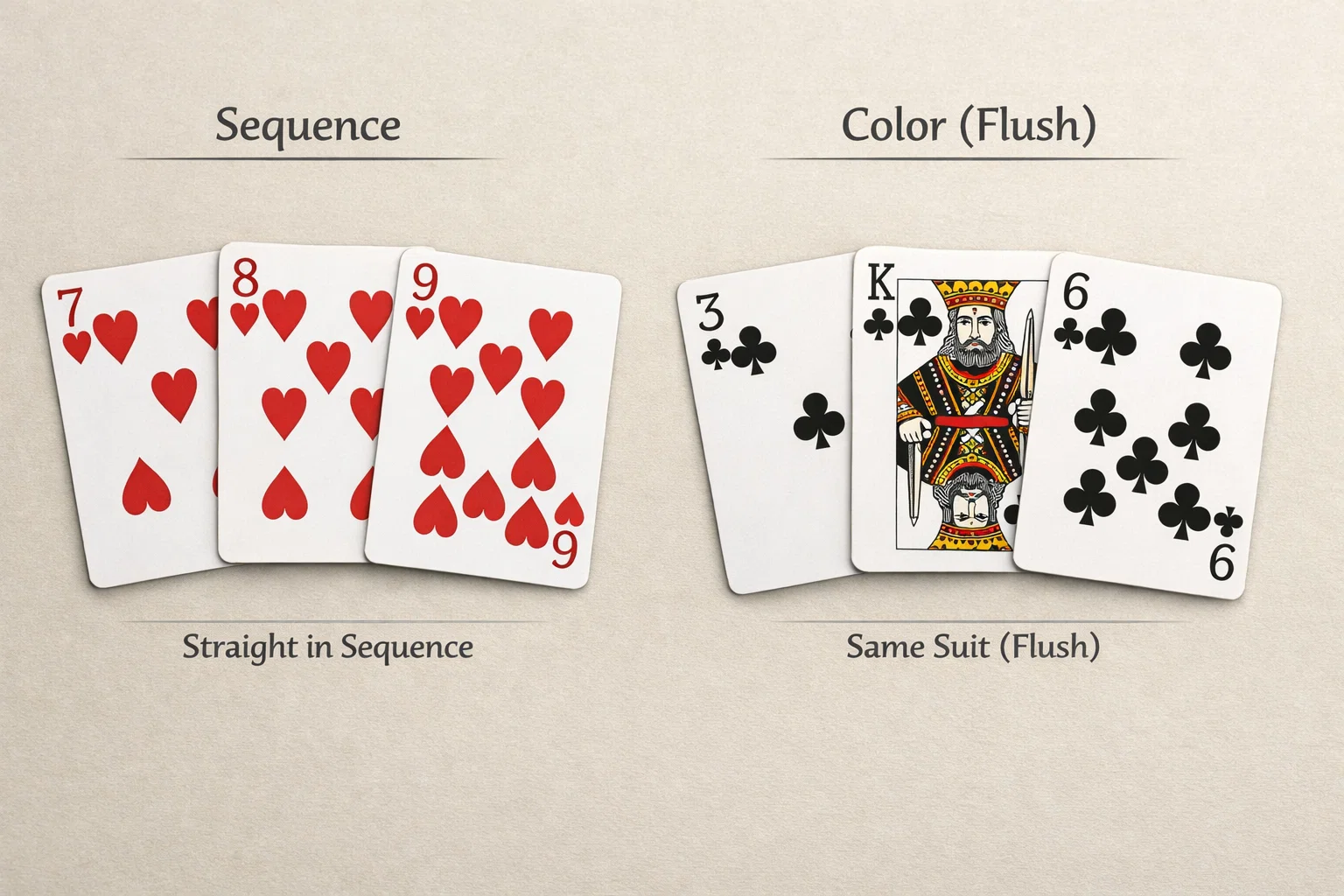
Sequence (Run): Three consecutive cards of different suits.
Color (Flush): Three cards of the same suit but not in sequence.
Pair: Two cards of the same rank.
High Card: When none of the above are met, the highest card determines the 3 patti winning sequence.
FAQ
When can you show in Teen Patti?
A show is only permitted when only two players remain in the hand. You must pay the current stake to see the other player’s cards.
Can a blind player ask for a show?
Generally, no. A blind player must either fold or become a seen player to initiate a show. However, a seen player can ask a blind player for a show by paying a higher stake (usually 4x).
Is show better than sideshow?
They are different tools. A sideshow is for when the table is crowded. A show is for when you are 1-on-1 and ready to end the betting.
What happens if both players have same hand?
In almost all 3 patti card rules, the player who requests the show loses the pot if the hands are a tie.
Is there a 3 patti rules pdf I can study?
Most platforms like best 3 patti game online sites provide a digital guide or a 3 patti rules chart within their help section.
How to play teen patti in hindi?
Teen Patti rules remain the same regardless of language. The key terms like “Show,” “Blind,” and “Seen” are used universally in teen patti rules in hindi as well.
About the Author
Ishaan “The Dealer” Sharma
Ishaan is a professional card game analyst and veteran strategist with over 15 years of experience in the Indian card gaming circuit. Based in Delhi, he has competed in high-stakes teen patti tournaments and has contributed extensively to the evolution of teen patti strategy guides. When he isn’t analyzing the latest 3 patti variations, he can be found exploring the intricate bidding mechanics of the 29 card game.