Welcome to the ultimate guide to mastering the “King of Indian Card Games.” Whether you are playing at a family gathering during Diwali or exploring the digital tables at TP Master, understanding the fundamental teen patti rules is your first step toward becoming a confident player.
Before we dive into the deep end, here are the essential highlights to get you started.
Key Takeaways
- The Goal: The objective is to have the best three-card hand and to maximize the pot before the showdown.
- Hand Hierarchy: A “Trail” (three of a kind) is the strongest hand, while a “High Card” is the weakest.
- Blind vs. Seen: Players can choose to play without looking at their cards (Blind) for a lower cost or look at them (Seen) and pay double the current bet.
- The “Boot”: Every round starts with a mandatory contribution to the pot, known as the boot or ante.
- Skill & Psychology: While luck deals the cards, winning consistently requires observing opponents’ betting patterns and managing your bankroll.
What Is Teen Patti? (Quick Explanation for New Players)
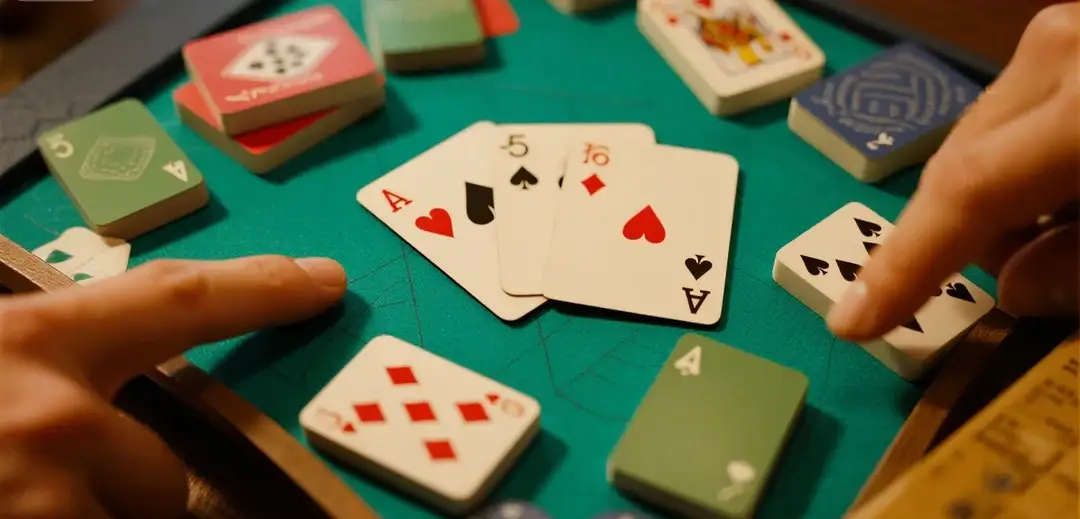
If you grew up in India, you’ve likely seen a deck of cards come out the moment a celebration begins. Teen Patti, which literally translates to “three cards” in English, is a social gambling game that originated in the Indian subcontinent. It is often referred to as “Flush” or “Flash” in some regions.
Why It’s Popular in India
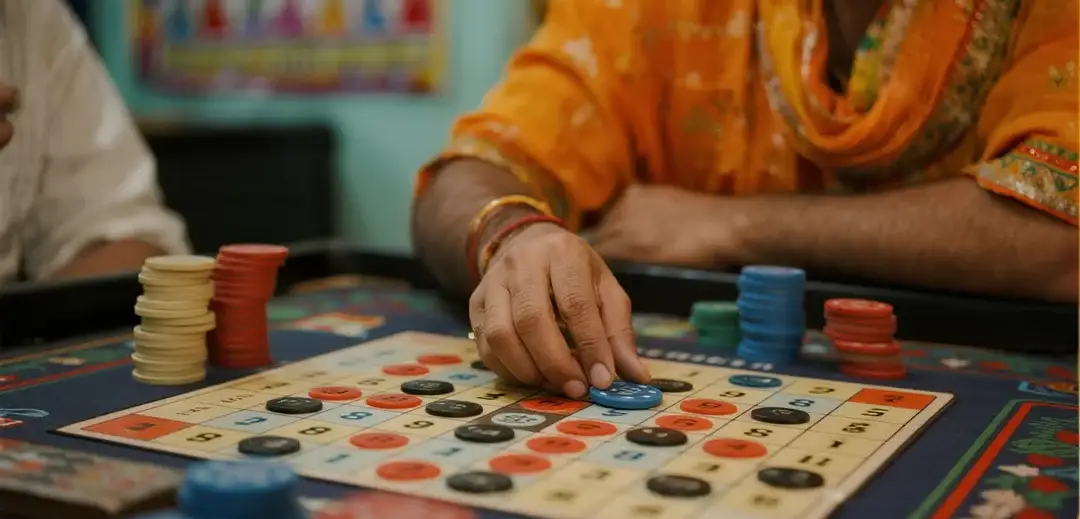
Teen Patti is more than just a game; it’s a cultural staple. Its popularity stems from its simplicity and the social interaction it encourages. Unlike many western games, Teen Patti is fast-paced, making it perfect for parties and casual hangouts.
Teen Patti vs. Poker: The Brief Difference
Many new players ask, “Isn’t this just Indian Poker?” While they share similarities—like hand rankings and betting rounds—there are key differences:
- Card Count: You play with only three cards in Teen Patti, whereas most Poker variants use five or seven.
- No Community Cards: In standard Teen Patti, there are no “Flop,” “Turn,” or “River” cards shared on the table.
- Blind Play: The ability to play “Blind” (without looking at your cards) is a unique mechanic that adds a massive psychological layer to the game.
In the context of rules meaning in hindi, the word “rules” translates to Niyam (नियम). Understanding these Niyam is the difference between losing your “Boot” in the first minute and staying in the game for the long haul.
Teen Patti Hand Rankings (From Highest to Lowest)
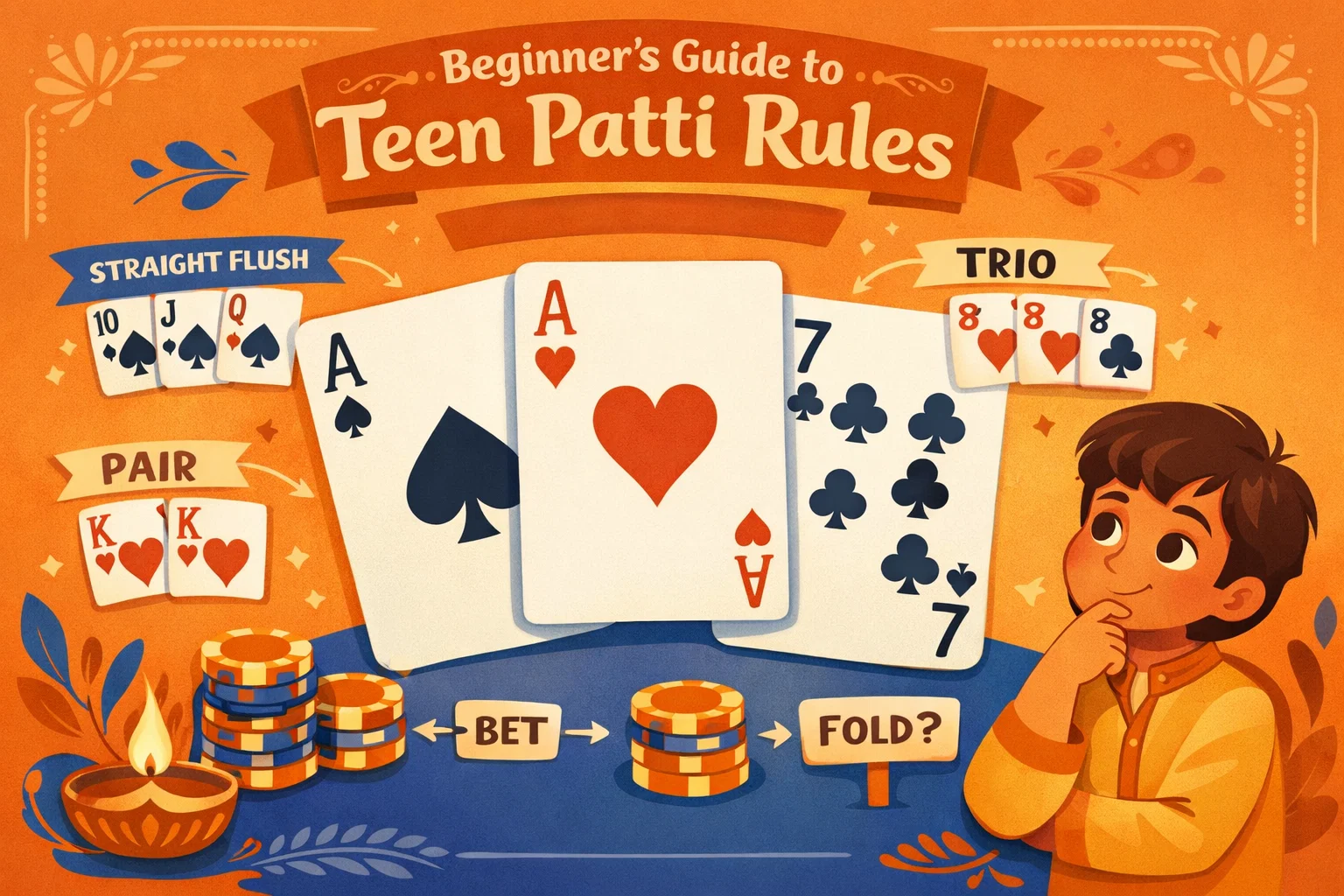
The most common question from beginners is: “Is my hand good enough to win?” To answer that, you must memorize the hierarchy of hands. In teen patti card rules, the strength of your cards determines your betting strategy.
1. Trail or Trio (Set)
Three cards of the same rank. Three Aces are the highest possible hand in the game, while three 2s are the lowest Trail.
Example: A-A-A or 8-8-8
2. Pure Sequence (Straight Flush)
Three consecutive cards of the same suit. This is a very rare and powerful hand.
Example: A-2-3 of Hearts or K-Q-J of Spades
3. Sequence (Straight)
Three consecutive cards of different suits.
Example: 9 of Hearts, 10 of Diamonds, and Jack of Clubs
4. Color (Flush)
Three cards of the same suit that are not in a sequence. If two players both have Color, the one with the higher top card wins.
Example: A-10-5 of Diamonds
5. Pair (Two of a Kind)
Two cards of the same rank. Between two pairs, the one with the higher-valued pair wins. If the pairs are equal, the third card (the “kicker”) determines the winner.
Example: K-K-4 or 7-7-J
6. High Card
The lowest-ranking hand. If your cards don’t fit any of the categories above, your hand is judged by the highest single card you hold.
Example: A-9-4 (Ace High)
| Hand Rank | Description | Example |
| 1. Trail | 3 Cards of same rank | A-A-A (Highest) |
| 2. Pure Sequence | 3 Consecutive, same suit | A-2-3 (Highest) |
| 3. Sequence | 3 Consecutive, mixed suit | A-2-3 (Highest) |
| 4. Color | 3 Cards, same suit | A-K-J (Highest) |
| 5. Pair | 2 Cards of same rank | A-A-K (Highest) |
| 6. High Card | No match | Ace High (Highest) |
How Betting Works in Teen Patti (Blind vs Seen Basics)
Betting is where the real game of Teen Patti happens. It’s not just about the cards; it’s about how much you are willing to risk.
The Boot Amount
Before the cards are dealt, every player puts a pre-decided minimum amount into the pot. This is the “Boot.” It ensures that there is something to play for in every round.
Blind Player vs. Seen Player
This is the core of teen patti game rules. After the cards are dealt, you have a choice:
Playing Blind: You do not look at your cards. You place your bet into the pot. The advantage? You only have to bet half of what a “Seen” player bets.
Playing Seen (Chaal): You look at your cards. Because you have the “advantage” of knowing your hand strength, you must bet at least double the amount of a Blind player to stay in the game.
The Flow of the Game
The betting continues in a clockwise direction. A player can choose to Fold (drop out and lose their money in the pot), Chaal (continue betting), or ask for a Sideshow.
Note: A Sideshow is when you ask the previous player to compare cards with you privately. This can only happen if both players are “Seen.” If your cards are lower, you must fold.
Common Teen Patti Rules Beginners Often Misunderstand
Many players lose money not because of bad luck, but because they don’t fully grasp the teen patti rules in hindi context or the technicalities of the sequences.
1. Sequence vs. Color Confusion
A common mistake is thinking that a Color (Flush) is better than a Sequence (Straight). It is not. In standard Teen Patti, a Sequence (three consecutive cards) beats a Color (three cards of the same suit).
Remember: Trail > Pure Sequence > Sequence > Color.
2. The Ace Rules (A-2-3 vs. A-K-Q)
Aces are versatile:
- A-K-Q is the highest-ranking Sequence/Pure Sequence.
- A-2-3 is the second-highest ranking Sequence/Pure Sequence.
- K-Q-J is the third highest.
Many beginners mistakenly think 2-3-4 is better than A-2-3, but the Ace makes the latter much stronger.
3. Blind Player Betting Limits
If you are playing Blind and the person before you is Seen, you only bet half of their stake. However, if you are Seen and the person before you is Blind, you must bet twice their stake. Understanding this ratio is vital for bankroll management.
4. Linguistic Confusions: Chai Patti vs. Teen Patti
New players searching for chai patti meaning in hindi or chai patti in hindi might be confused. Chai Patti literally means tea leaves. While “Chai-Patti” is sometimes used as slang for a small, casual “tea-money” game of cards, it is not a technical term for the game’s rules. Similarly, ghar patti meaning usually refers to a “house game” played among family members rather than in a professional setting.
Simple Teen Patti Tips for Beginners
You don’t need to be a math genius to play well, but you do need discipline. Here is how to not “lose too much too fast” while you’re learning.
Play Fewer Hands: Beginners often want to play every round. If your cards are poor (like a low High Card), it is better to fold early and save your chips for a better hand.
Observe Betting Patterns: Even if you aren’t in the hand, watch the other players. Does someone always bet big when they have a Pair? Do they play Blind for a long time to scare others?
Don’t Overvalue High Cards: Having an Ace is great, but in Teen Patti, a simple Pair of 2s will beat an Ace-High hand every time. Don’t go “All-in” just because you have an Ace.
Stay “Blind” for a While: If the boot is small, staying Blind for 1-2 rounds is a great way to keep the pressure on “Seen” players without spending too much.
Teen Patti Rules FAQ
Is Teen Patti skill or luck?
It is a mix of both. Luck determines the cards you are dealt, but skill determines how much money you win with a good hand—or how little you lose with a bad one.
Is Sequence higher than Color?
Yes. In the hierarchy of teen patti card rules, a Sequence (Straight) ranks higher than a Color (Flush).
Can a Blind player win against a Seen player?
Absolutely. A Blind player wins if their hidden cards are stronger during the “Show” or if the Seen player folds out of fear that the Blind player has a “Trail.”
What is the weakest hand in Teen Patti?
The weakest hand is a High Card, specifically a 5-3-2 of mixed suits (as 4-3-2 would be a sequence).
What is the meaning of “Rules” in Hindi?
In the context of gaming, rules meaning in hindi is Niyam (नियम) or Kanoon (कानून), though Niyam is the more common term for card games.
Teen Patti is a game of nerves, strategy, and a bit of “Desi” flair. By mastering these teen patti rules for beginners, you’ve already cleared the biggest hurdle to enjoying the game.
Ready to put your knowledge to the test? Head over to the TP Master Blog for more advanced strategies, or join a table today to start practicing your skills!
About the Author
Ishaan “The Dealer” Sharma
Ishaan is a professional card game analyst and veteran strategist with over 15 years of experience in the Indian card gaming circuit. Based in Delhi, he has competed in high-stakes teen patti tournaments and has contributed extensively to the evolution of teen patti strategy guides. When he isn’t analyzing the latest 3 patti variations, he can be found exploring the intricate bidding mechanics of the 29 card game.